

 Vehicle-mounted solutions

 Home
Home
Industrial robots and cooling fans: Neglected collaborative cooling components
 Feng Zhi Yuan
 Aug 17,2026

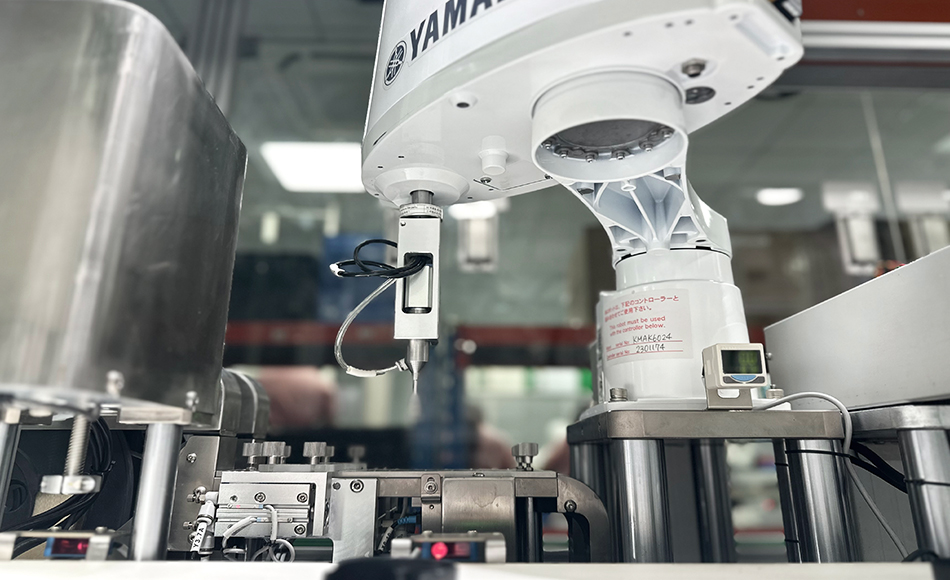
In the current thermal technology solutions for industrial robots, liquid cooling and semiconductor active cooling are generally regarded as mainstream core technologies. However, cooling fans remain the most fundamental and widely used core thermal components in the current industrial robot field, demanding high design capabilities. They not only strike a balance between cost and operational reliability but also face new technical challenges in specific application scenarios.
Upgrading the core value of industrial robot cooling fans
The cooling fan is not an "outdated supporting role" in the cooling system of industrial robots, but a fundamental core component that balances cost and reliability. It covers all core modules such as control cabinets and servo motors. Through patented designs such as dual-fan staggered operation and air intake filtration, it can achieve a heat transfer efficiency 10 times higher than natural cooling, supporting the implementation of high power density designs.
Technological breakthroughs tailored for new working conditions
In response to the pulse-type thermal load characteristics of frequent start-stop operations of collaborative robots, AGVs, and other equipment, the cooling fan has been specifically upgraded in two core capabilities:
Instant response: Skip the traditional gradual speed-up process, quickly enter an efficient cooling state, and offset the cumulative impact of heat peaks.
Resistance to start-stop fatigue: The preferred choice is a dual-ball bearing structure, which can withstand start-stop impacts ranging from 30 to 200 times per hour, far superior to oil-filled or hydraulic bearing solutions. The precise selection logic is guided by working conditions, breaking away from the traditional approach of solely referencing nominal air volume and noise. The optimal solution is matched according to the scenario:
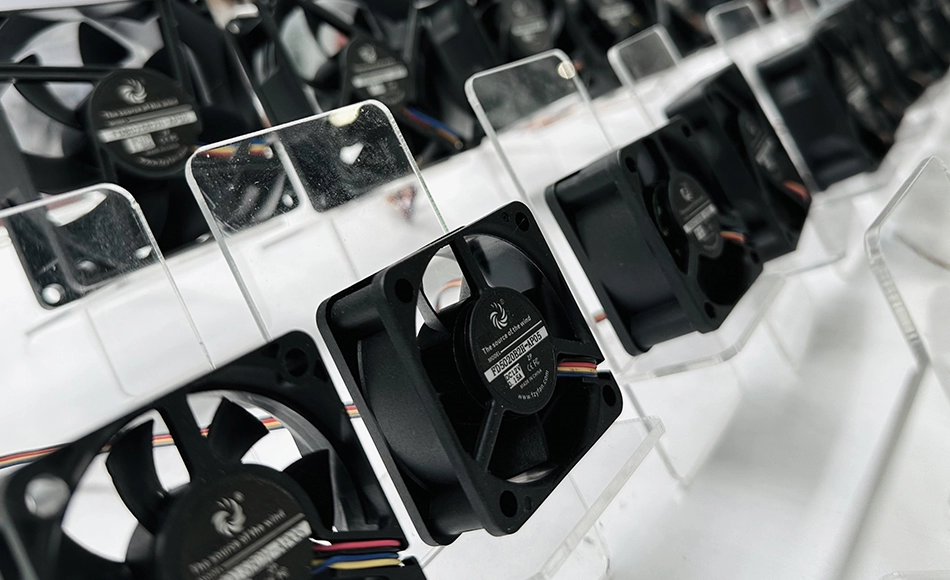
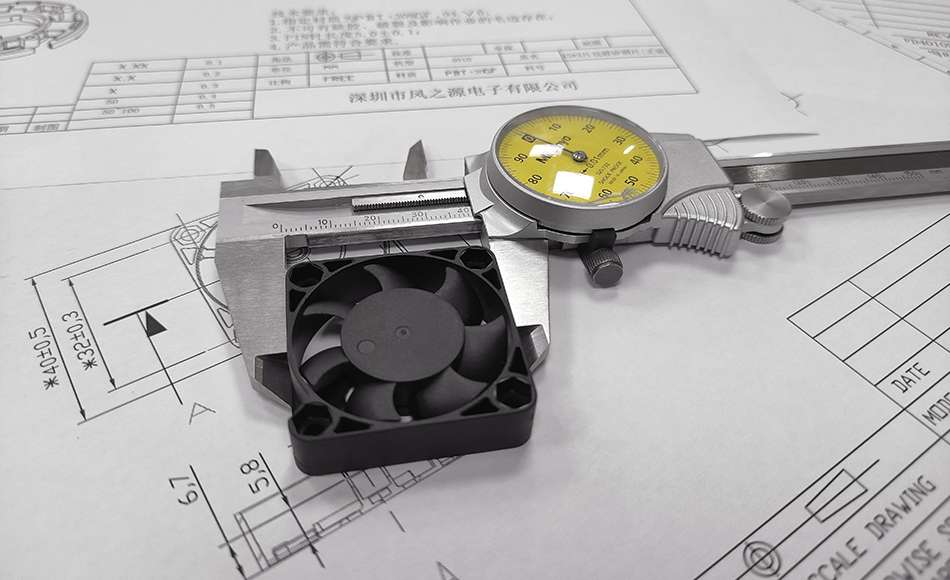
Compact space scenario: Selecting a 35×35×10mm ultra-thin dual-ball bearing axial fan, which meets the temperature control requirements of the power module and AI control unit
High static pressure demand scenario: Utilizing a DC blower, it overcomes the resistance of narrow internal air ducts through strong airflow output;
Life cycle optimization: By integrating intelligent speed regulation and refined structural design, we can significantly reduce long-term operation and maintenance costs, serving as a crucial guarantee for the stable operation of industrial robots.
New selection logic: from "looking at air volume" to "looking at operating conditions"
Therefore, when selecting a cooling fan for industrial robots, it is no longer sufficient to merely consider the nominal values of air volume and noise. In compact spaces, ultra-thin dual-ball bearing axial fans with dimensions of 35×35×10mm are being used for precise temperature control in robot power modules and AI control units. In scenarios requiring higher static pressure, DC blowers can provide stronger airflow than ordinary axial fans, overcoming the resistance of compact internal spaces.
In summary, cooling fans are becoming "calm partners" that adapt to the complex working conditions of robots through bearing upgrades, intelligent speed regulation, and refined design. Proper fan selection is a crucial aspect of ensuring long-term stable operation of robots and reducing maintenance costs.
 Collaborative core of hybrid cooling system in AI intelligent computing center